
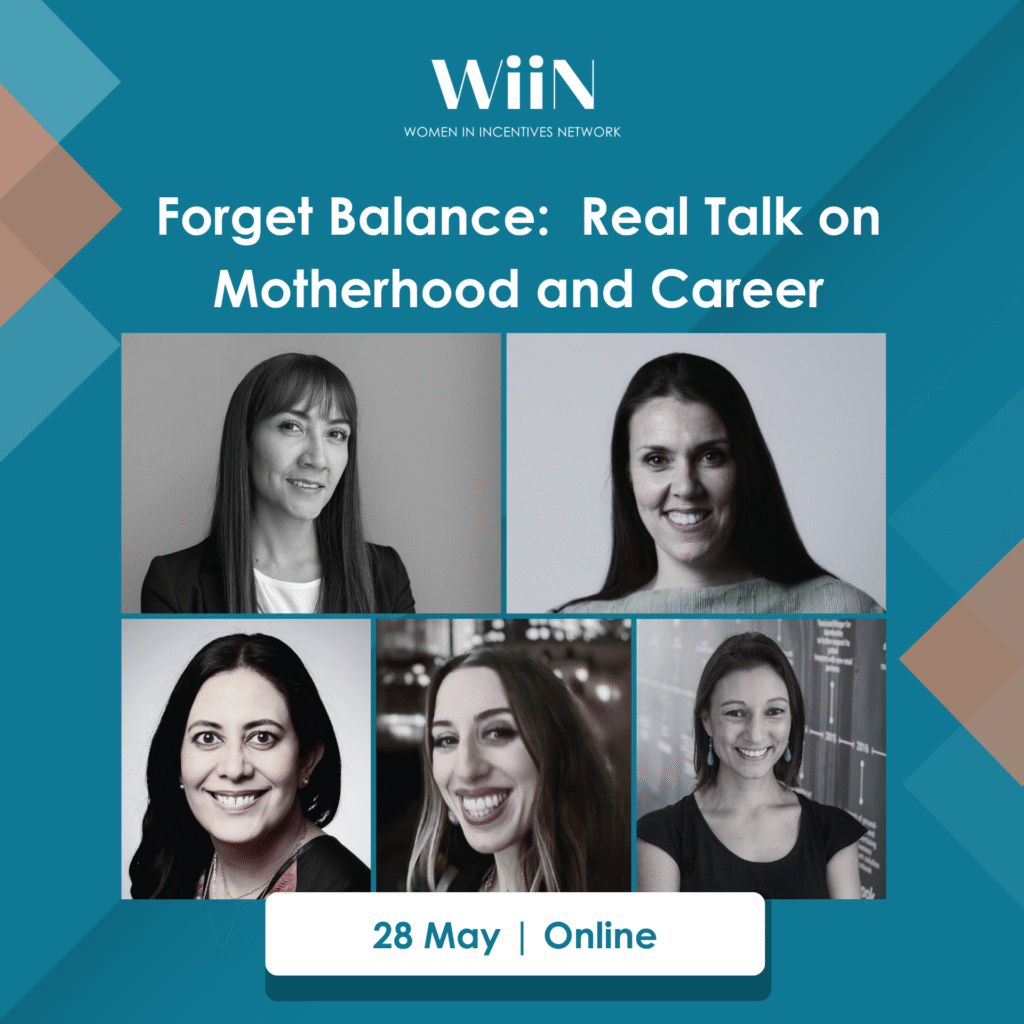
We wanted an open and frank chat on motherhood x career, and we definitely got one.
When we named this session Forget Balance, we were only half joking. Our first LATAM-focused panel brought together women from across loyalty, incentives, payments and fintech to talk honestly about building a career while raising a family.
What emerged wasn’t a conversation about how to achieve balance. It was a conversation about guilt, expectations, judgement and support. In fact, most of the panel had already decided balance wasn’t the goal.
There was a lot to unpack.
A huge thanks to our panellists:
- Rocío Liébana (Founder & CEO, RLC Solutions, Co-founder, WiiN)
- Alizja Conteh (VP Global Retail, Shift4)
- Jimena Pierdant (Head of Mexico, Cashwave & IMA LATAM President)
- Maury Meléndez (LATAM Director, TDS Gift Cards)
- Debora Franchim (Global Director, Loyalty & Personalization, dunnhumby)
We need to overcome… guilt
One of the strongest themes throughout the discussion was that the idea of having it all can feel like just another stick to beat yourself with.
The conversation repeatedly returned to guilt.
One attendee summed it up perfectly by saying that balance is not a daily measurement.
Some weeks’, work needs more attention. Other weeks family does.
Trying to perfectly balance both every single day leaves people feeling like they’re failing when, in reality, they’re simply living through different seasons of life.
You can’t “win” at balance, and there will be guilt about traveling, guilt about missing moments at home, and guilt about wanting something for yourself outside of work and family.
There is also guilt about ambition itself. About caring deeply about your work. About wanting to build something, progress, travel or take on new opportunities.
The panel offered a welcome perspective. Children are not only learning from the time we spend with them. They’re learning from what they see us do. They’re watching us travel, meet people, solve problems, build careers, learn new skills and create opportunities for ourselves.
Those lessons matter too.
Being fulfilled professionally does not make someone less committed as a parent.
We need to overcome… our own expectations
The panel spent considerable time discussing expectations and, more specifically, the pressure women place on themselves.
While other people’s judgments certainly exist, modern motherhood often arrives with an impossible checklist loaded into us by default.
We internalise the messages. Build a successful career, yet always be present at home. Maintain friendships. Exercise regularly. Keep the house organised. Never miss an important moment.
The list never ends and neither do the competing demands.
What emerged from the discussion was that much of this pressure isn’t necessarily coming from employers, colleagues or even family members.
Often, it’s coming from within.
Several panelists reflected on the work they had done to let go of unrealistic expectations and define success on their own terms rather than trying to meet standards they never created.
It’s an ongoing task for all of us.
A useful question raised during the discussion was simple: would we say these things to a friend?
If not, why are we saying them to ourselves?
We need to overcome… other people’s judgements
It’s true. Even in 2026, there are still judgmental comments about women and work, and the comments women receive after becoming mothers can be particularly pointed.
Questions about whether they work too much.
Assumptions about childcare arrangements.
Suggestions that career ambition somehow conflicts with being a good parent.
The panel also touched on the fact that women often face scrutiny regardless of the choice they make.
Work full-time and you’ll be judged.
Work part-time and you’ll be judged.
Stay at home and you’ll be judged.
Return to work quickly and you’ll be judged.
The conclusion from the panel was simple. There is no universally correct way to combine career and family life because every family is different.
We need to build our own support systems
If there was one practical takeaway from the session, it was that nobody does this alone.
From external judgement to internalised fears, support matters.
It comes from partners who share responsibilities, family members who step in when needed, managers who understand, teams who cover for each other and friends who simply listen.
Several panellists reflected on the difference a supportive workplace can make. Not because it removes the challenges, but because it removes the feeling that you have to manage them in secret.
The discussion also highlighted how often parenthood is still treated as something that happens quietly behind the scenes.
School pickups.
Sick children.
Childcare challenges.
These are everyday realities for millions of working parents, yet many still feel pressure to hide them.
The panel challenged that idea and encouraged more openness, empathy and normalisation of these conversations at work.
It’s something all of us can contribute to, regardless of our role or whether we have children ourselves.
One final thought
As the session came to a close, the advice from the panel was remarkably consistent.
Don’t be too hard on yourself. The women on the panel weren’t striving for perfect balance. They were focused on what needed their attention today and trusting that tomorrow might look different. That’s something we can all do.
___________________________________
Written by Elaine Keep www.elainekeep.com