
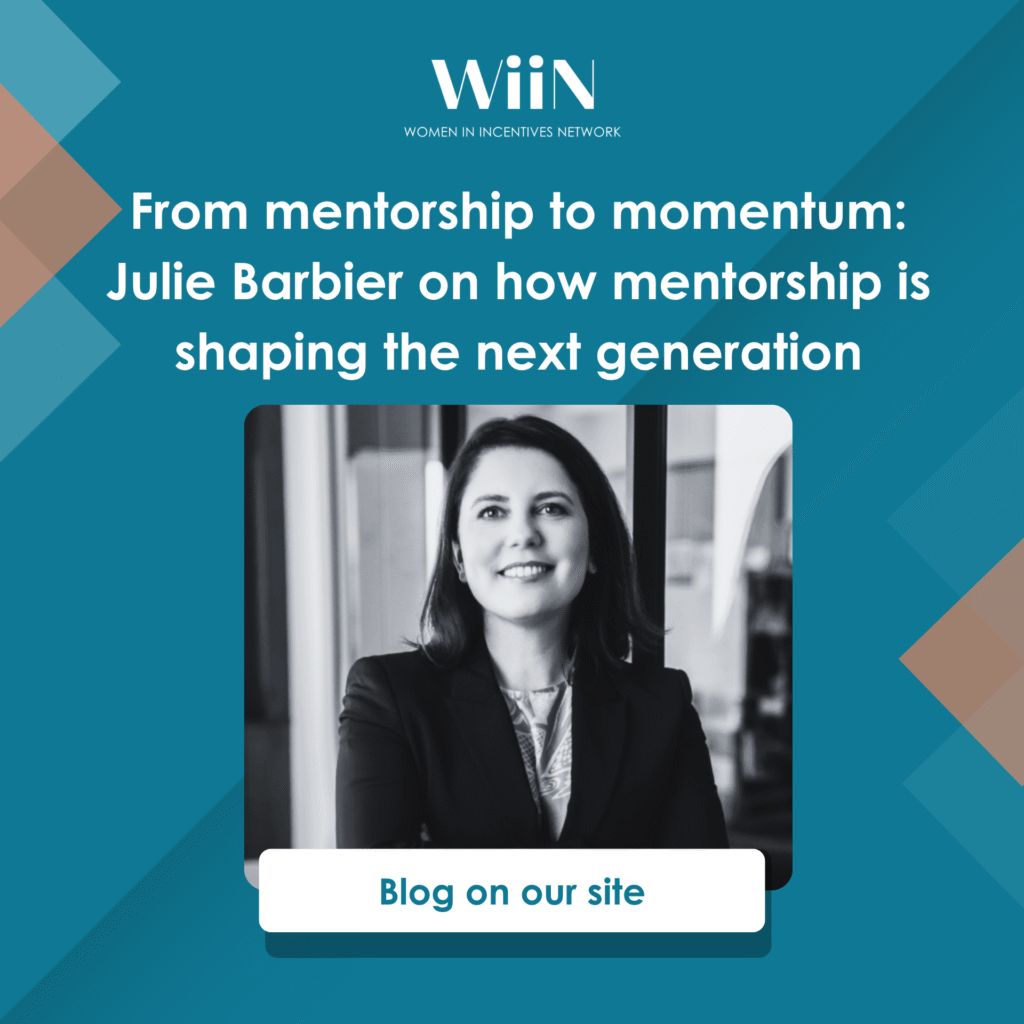
Merit Incentives is the sponsor of WiiN’s latest mentorship cohort. We spoke to CEO and co-founder Julie Barbier about the partnership, the origins of WiiN, and why mentorship continues to matter.
Can you tell us a bit about Merit in brief and your role?
Merit is a global engagement technology company. We design and deliver customer loyalty programmes, employee engagement initiatives, and sales incentives for large enterprise clients, including banks, airlines, and telecom companies.
We now operate in over 100 countries. I started the business in Dubai, and we’ve since expanded globally, with a strong presence in Saudi Arabia, Europe, and the UK.
As CEO, I focus on scaling the business, building the right team, and making sure we continue to evolve. Recently, we’ve been transitioning from an enterprise software led model to a more product led approach, including the development of new AI driven capabilities.
What made sponsoring WiiN’s latest cohort the right partnership for Merit at this stage?
For me, it’s a natural continuation.
I was involved in creating WiiN at the beginning, so I’ve seen firsthand the impact it has had. As Merit has grown, it felt like the right moment to give back and support something that aligns so closely with our values.
Mentorship has always been at the core of WiiN, and we strongly believe in it at Merit as well. So the partnership made sense not just from a visibility perspective, but because it reflects how we operate as a business.
Can you take us back to the beginning and why was WiiN created?
WiiN started during the COVID lockdown in 2020.
At the time, much industry activity stopped, especially physical events. But we were still connected to people around the world, and I noticed that women were underrepresented, not just in numbers but also in leadership roles.
Another challenge was mentorship. It was difficult to find mentors who had lived similar experiences, especially as a female founder. You could find mentors, but often they didn’t fully understand the specific challenges.
So I reached out to five women across different geographies and said: We have an opportunity to build something meaningful during this time.
The goal wasn’t just networking. It was to create a mentorship programme that supports personal growth, builds confidence, and helps women navigate their careers or businesses.
Why focus so heavily on mentorship?
Because confidence is often the biggest barrier, not capability.
At the beginning, everyone wanted to be a mentee. No one felt ready to be a mentor. We had to actively encourage people to step into that role and recognise the value of their own experience.
What was interesting is that mentors ended up learning just as much as mentees.
You had experienced professionals from more mature markets sharing knowledge, while also learning about new technologies and perspectives from younger professionals or different regions. It became a two way exchange.
And over time, we started to see real outcomes. People are getting promotions, changing roles, or simply feeling more confident in their decisions.
There has been progress around equality. Why do mentorship programmes like WiiN still matter?
Because a lot of the challenges haven’t disappeared, they’re just less visible.
Many women don’t always recognise the small things they experience along the way. You might ignore them or accept them as normal.
Mentorship helps you step back and understand those situations differently. It gives you the tools to navigate them, rather than just tolerate them.
It’s also about self-development. Once you understand your value and your direction, you don’t waste time on things that don’t serve you. You move forward.
And importantly, it creates a safe space. There’s no judgment, and there’s complete confidentiality. That allows people to be honest about what they’re experiencing.
On a personal level, has mentorship shaped your own leadership journey?
Absolutely and it still does.
I think you should never stop being mentored or coached. Every stage of your career brings new challenges, and you always need people around you who can guide you.
Mentorship doesn’t only come from one place, either. It can come from your team, your board, your investors, or anyone who challenges you and helps you grow.
What I value most is the balance. Good mentorship isn’t just about telling you what you’re doing wrong. It’s also about reinforcing what you’re doing well and giving you the confidence to keep going.
Since partnering with WiiN, what impact has stood out to you?
The sense of community. Many participants stay connected long after the programme ends. Some mentees become mentors themselves, and many people form genuine friendships.
It’s not just about career progression. It’s about personal development, shared experiences, and supporting each other in a meaningful way.
That’s something we didn’t fully anticipate at the beginning, but it’s become one of the most valuable outcomes.
As a CEO, what do you think women in leadership roles are often navigating that isn’t always visible?
There are still subtle differences in expectations.
For example, people might ask me how my children are doing in a professional setting. That question wouldn’t always be asked of a man in the same position.
Over time, you learn not to be affected by those things. You focus on your own leadership style rather than trying to fit into a predefined model.
For me, that means leading in a way that feels natural. I don’t want to copy a traditional leadership style, I want to bring something different.
Beyond sponsorship, how does Merit support women and leadership more broadly?
It’s not just about supporting women, t’s about creating an environment where diversity and different perspectives are valued.
We apply mentorship and coaching internally as well. We encourage people to challenge each other, to grow, and to develop.
At the same time, we operate in regions that are evolving quickly, particularly in the Middle East. There has been significant progress in women’s participation in the workforce and leadership roles, and it’s happening at pace.
We want to be part of that shift by creating opportunities and supporting development across the organisation.
Looking ahead, what long term impact would you like partnerships like this to create?
I’d like to see mentorship continue to evolve and expand.
One area I think could be really valuable is combining mentorship with executive education…giving people both the support and the tools to take the next step in their careers.
More broadly, it’s about helping people align their skills, values, and opportunities. Not everyone wants to be a CEO, but everyone wants to feel they’re progressing in the right direction.
If partnerships like this can continue to support that, then they’re doing exactly what they should.
___________________________________
Written by Elaine Keep www.elainekeep.com