
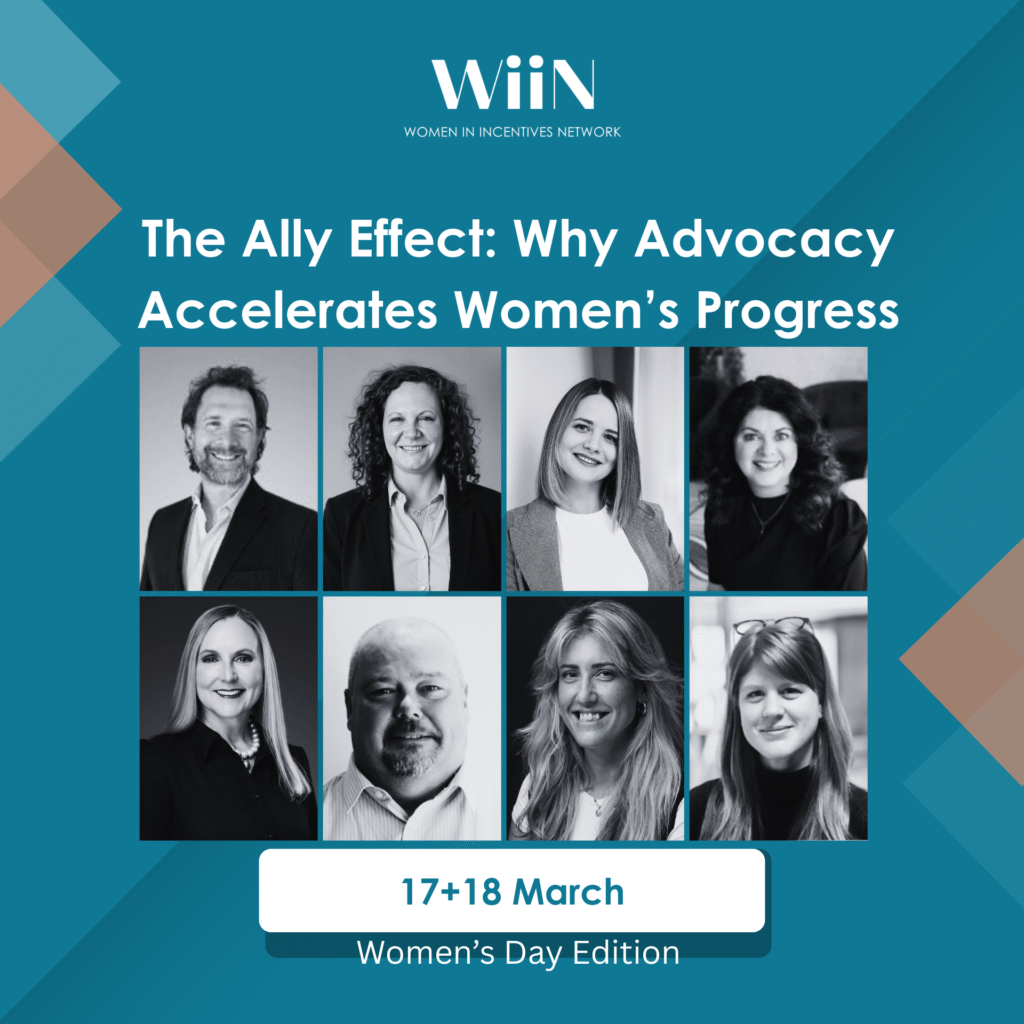
Inclusion doesn’t happen by accident: what women in incentives need next
Across two panels celebrating International Women’s Day, our WiiN members shared honest reflections on what has changed, what still needs to change, and what we should actively advocate for as women in incentives and as allies.
One idea came through clearly: inclusion rarely happens by accident. While representation is improving, we have a long way to go to shift not just the optics of female inclusion, but the outcomes – how women feel each day in the roles, how empowered they are to seek balance, speak up, and get the same opportunities.
While more women now serve on senior teams, they remain less likely to hold roles that lead to CEO positions. Leadership in marketing and HR is growing, but pathways into roles like CTO, CFO, and CRO still need attention.
As one panelist put it:
“Representation is not just about who is in the room. It’s about who feels heard once the conversation starts.”
Here are the takeaways from the sessions.
Exclusion is subtle
A consistent theme across both panels was the subtlety of exclusion. While in the past, memories of witnessed exclusion included a male colleague aggressively challenging a woman in a meeting, where no one intervened, or unintentionally dominating a conversation, there were also more subtle indicators of exclusion.
One example from a business lunch: despite being the one paying, the bill was handed to a male colleague. A small moment, but a telling one.
Other examples included:
- women being overlooked or spoken past
- questions directed to male colleagues instead
- not being backed strongly enough
- assumptions about who holds authority
“A lot of exclusion is subtle. It’s in the assumptions, the habits, and the spaces where decisions get made without everyone there.”
Inclusion still depends too much on individuals
If there was one thread running through both panels, it was this:
“Inclusion rarely happens by accident. It happens when someone notices who is being left out and chooses to act.”
Advocacy showed up in many forms:
- promoting women into leadership roles
- backing someone’s contribution in a meeting
- creating visibility beyond immediate teams
- stepping in when behaviour crosses a line
Empowering women means considering everything from
- Who gets the speaking opportunity?
- Who feels confident enough to put themselves forward.
- How feedback is given.
One speaker highlighted the impact of encouraging women to speak at conferences, rather than waiting for them to self-nominate. Many don’t put themselves forward, even when they are more than qualified.
Another shared how sending a simple note to a CEO praising a team member had a lasting impact on that person’s career.
These actions matter. But they are inconsistent by nature.
As one panelist put it: “Progress has happened, but it still depends too much on individuals doing the right thing. The next step is building it into the system.”
From awareness to consistency
The next step is making this consistent. Mentorship is a good example. While initiatives like WIIN’s mentoring programme are making an impact, structured mentorship is still not standard across the industry.
Yet, there are risks. Hiring for representation alone risks becoming a tick-box exercise. We must remember that inclusion is not about presence. It is about whether people can succeed once they are there.
“The real test of inclusion is not what we say in principle, but the everyday choices we make about who we support, who we listen to, and who we help move forward.”
What should we advocate for next?
The takeaway is that inclusion should not depend on whether you happen to work with the right manager.
The panel closed with clear, practical priorities:
- Treat inclusive leadership training as essential, not optional
- Pay attention to those who are less visible or less likely to put themselves forward
- Be more intentional in how trust is communicated
- Create more opportunities for external advocacy
- Build systems that support inclusion, not just moments of goodwill
___________________________________
Written by Elaine Keep www.elainekeep.com